IRS wins the World Cup, Two locked doors, Enron's creative accounting is back, Apple goes rental, Southwest ships oil

40th Edition
Greetings folks and a warm welcome to the 40th Edition of Friday Finance,
Olive Garden brought back its Never-Ending Pasta Pass last week for the first time since 2019, $100 for 13 weeks of unlimited pasta, soup, salad and breadsticks, and all 10,000 of them were gone in under a minute. A single pasta bowl starts at $14.99, so the pass pays for itself on the seventh visit, and the last time Olive Garden checked, passholders were turning up more than twice a week. Call it 26 visits, about $390 of food, for $100. Which sounds like a company losing money on purpose, but it's really a marketing expense. Let’s get right to it.
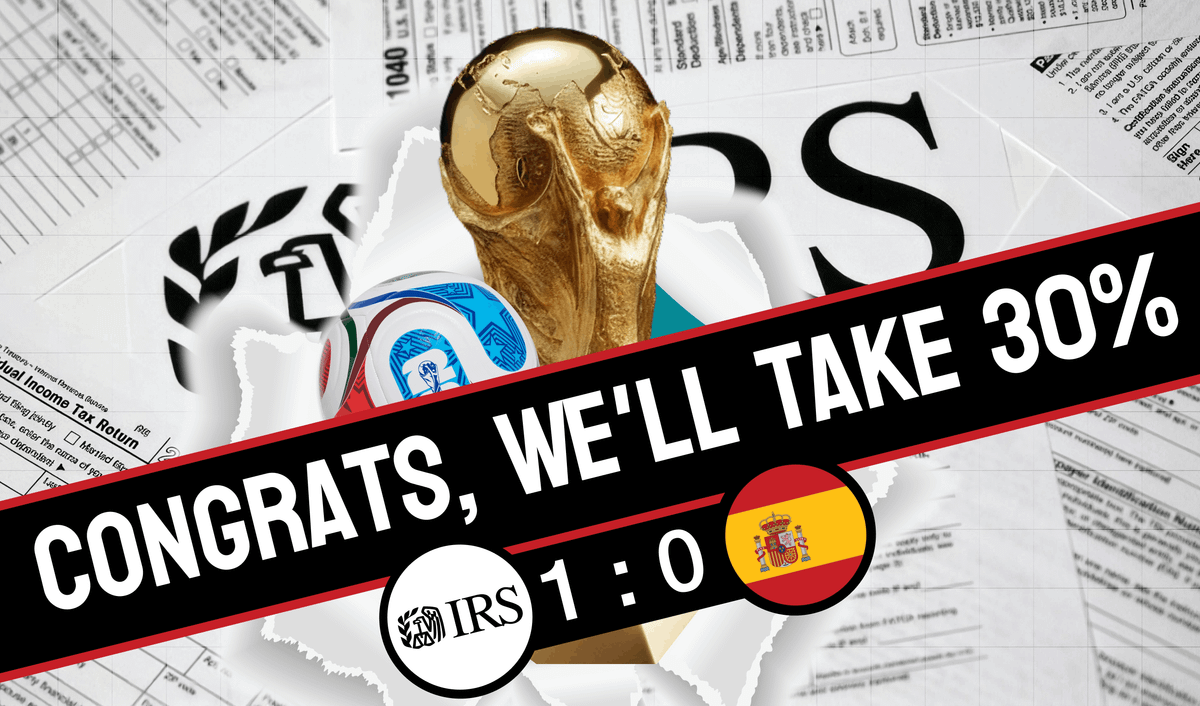
TL;DR: Spain won the World Cup and a $50M prize, and then discovered US tax law. Foreign athletes face a default 30% federal withholding on US-source income, taken off the gross. FIFA and the national associations negotiated tax exemptions. The players did not get one. Worse, the players hit hardest are from countries without US tax treaties, Curacao, Cape Verde, Haiti, exactly the federations the prize money is meant to develop. The tax code reproduced the sport's economics precisely.
Spain won the World Cup final in New Jersey on Sunday, along with a $50 million prize, and then ran into the least glamorous part of playing a tournament on American soil. Foreign athletes competing in the US face a default 30% federal withholding on their US-source income, taken off the gross, before a single expense is deducted. Because this tournament was split across three countries, the IRS, the Canada Revenue Agency and Mexico’s tax authority agreed a formula back in June: your prize is taxed by each country in proportion to how many of your matches you played there. So the US only reaches the American share of Spain’s run, but with the final at MetLife and most of the late rounds stateside, that share is not small. Estimates of the US bite range from about $15 million to, on the aggressive end, most of the cheque. Then come the state “jock taxes” on income earned competing there, and New Jersey, which hosted the final, does not recognize tax treaties at all.
FIFA and its corporate affiliates negotiated a comprehensive tax exemption for this tournament, and after months of lobbying the national football associations got relief too, with Mexico writing a blanket exemption into its federal revenue law. But the exemption stops at the organisation. It does not reach the players. As one tax specialist put it, at the individual player level there is no exemption. So the governing body that keeps the overwhelming majority of the money pays nothing, and the people who actually won the thing are withheld at source. In Ed 37 we wrote that the players barely see the $50 million. It turns out the IRS sees it first. Nobody designed it that way, but the tax treatment ended up reproducing the sport’s economics exactly: the organisation walks, the labour is withheld.
It also falls hardest on the federations least able to absorb it. Whether a player pays the full 30% or a reduced treaty rate depends entirely on whether his country has a tax treaty with the United States, and before FIFA’s deal only 18 of the 48 qualifiers were covered by one. The countries without treaties, Curacao, Cape Verde, Haiti, are emerging football nations where prize money is the primary capital for building the sport at home. Curacao is interesting: as a constituent country of the Netherlands it is excluded from the US-Netherlands treaty, because Washington terminated the old Netherlands Antilles agreement in 1987 to stop treaty shopping. Two players in the same dressing room can therefore owe different amounts on identical winnings. The one consolation is enforcement, because the money leaves the country with the players, and New Jersey officials looked at seizing prize money before it was distributed and concluded it was impractical.
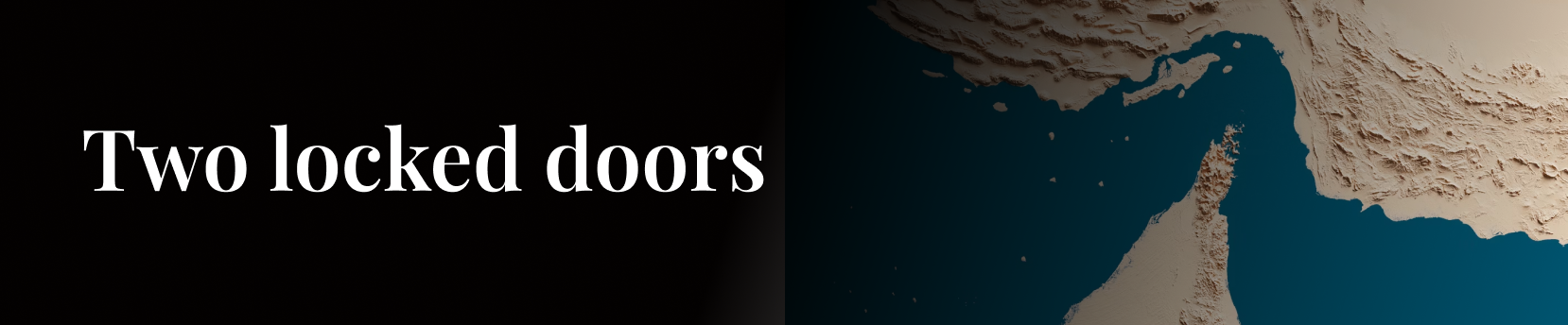
TL;DR: Brent topped $100 for the first time since May after Houthi militants hit two Saudi tankers and declared a blockade. The reason it moved so hard is geography: Iran already shut the Strait of Hormuz, so Saudi Arabia rerouted more than 70% of those exports overland to the Red Sea, and the Houthis are now shooting at that exit too. The oil did not disappear, the exits did. And one cargo with a Chinese destination sailed through untouched.
Brent crude closed above $100 on Thursday for the first time since May, up about 7% on the day and touching $102, after Iran-aligned Houthi militants said they had struck two Saudi oil tankers in the Red Sea and declared a naval blockade of the kingdom. Saudi Arabia has two ways to get oil to the sea, and Iran closed the first one, the Strait of Hormuz, early in this war, where crossings have fallen to single digits. Riyadh responded by rerouting more than 70% of those exports overland by pipeline to Yanbu on the Red Sea, which made the Bab al-Mandeb strait, a channel about 20km wide carrying 12% to 15% of global maritime trade, the kingdom’s only working bypass. The Houthis are now shooting at that end. Five laden Saudi tankers reversed course, four turning for the Suez Canal. Prices eased about 3% on Friday on worries about what $100 crude does to growth, but Brent is still up more than 30% this month.
Maritime trackers noted a cargo crossing Bab al-Mandeb this week that was Saudi in origin but Chinese in crew and destination, and it drew no interference, and analysts are openly watching whether Chinese-linked tankers keep getting the pass they largely enjoyed during the Houthis’ earlier Red Sea campaign. If that holds, this is not a blockade of Saudi oil. It is a blockade of Saudi oil going west, which makes it less an embargo than a forced change of customer. It is worth adding that the Houthis are not a recognised state, so their “blockade” has no clear standing under the law of naval warfare, which leaves war-risk underwriters pricing a threat that formally does not exist. Meanwhile Kazakhstan suspended crude exports through its Caspian terminal after drone attacks, so the market is now working around three separate chokepoints at once.
The oil price is the headline, but the bond market is the bill. US 10-year yields pushed to 4.67%, a 52-week high, and German 10-years touched their highest since 2011, because an energy shock is the one problem central banks have no good answer to: it lifts prices and lowers growth at the same time. The European Central Bank held rates and warned the inflationary impact has not fully played out. For anyone financing real assets, that long end is the number that matters far more than the crude print, because every basis point reprices a cap rate, a refinancing and a development pro forma. Some perspective is also fair. Brent traded above $109 earlier in this same war, in April, so $100 is a re-approach rather than a new peak, and part of this week’s move is genuine lost supply, part is a risk premium on Trump’s threat of a “massive attack,” and part is traders who were caught short. How massive is anybody’s guess.
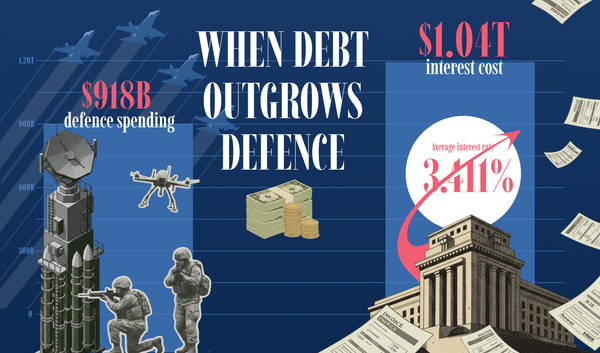
TL;DR: Alphabet, Microsoft, Amazon, Meta and Oracle report about $1.35 trillion of debt. A Nikkei analysis of their footnotes found roughly $1.65 trillion more in off-balance-sheet AI obligations, bigger than all the debt they actually disclose, and up eightfold in four years. It is legal, it is disclosed, and it uses the same tool Enron did. The difference is that Enron hid its vehicles. These are filed where nobody reads. This week the market started caring.
Look at what Alphabet, Microsoft, Amazon, Meta and Oracle officially owe and it is large but manageable, about $1.35 trillion of debt against some of the biggest cash piles on earth. Look in the footnotes and a second, bigger pile appears. A Nikkei analysis of the fine print in their filings found roughly $1.65 trillion of off-balance-sheet obligations tied to the AI buildout, more than all the debt they actually report, and it has grown about 8x in four years. These are long-term data-centre leases, chip supply commitments and joint ventures with private-credit funds: must-pay obligations that behave exactly like debt, because you owe them whether or not the demand shows up, but that do not sit on the debt line.
The mechanism is an old one. Rather than borrowing to build a data centre and putting the loan on your balance sheet, you help set up a separate legal entity, that entity borrows the money and owns the building, and you sign a long, binding lease. The debt belongs to the entity, not to you. Meta’s Hyperion data centre in Louisiana is the clearest case: a separate vehicle it funded alongside Blue Owl Capital took on $27 billion of debt, Meta is the sole tenant, and Meta records none of it. Add up all its off-book commitments and Meta, a company most investors describe as effectively net cash, is carrying around $420 billion, roughly three times its reported debt. Oracle has about $260 billion of future lease commitments off its books, a figure that has grown roughly thirtyfold in four years, and S&P has already downgraded it to its lowest investment-grade tier citing exactly this. Even Alphabet, the cleanest of the five, has disclosed more than $40 billion of funding commitments to off-balance-sheet vehicles.
The comparison everyone reaches for is Enron, which used the same special-purpose vehicles to keep debt off its books before collapsing 25 years ago. As one analyst put it, Enron’s crime was not having the vehicles, it was hiding them. What these companies are doing is fully legal, comply with the accounting standards, and is disclosed in black and white. Which is its own kind of unsettling, because it means the modern way to hide something is not to conceal it but to file it somewhere nobody reads. It was just put where you were not looking, and the Bank for International Settlements flagged this shadow borrowing back in March.
Normally “that debt is not on our books” is a comfort. The moment one of these data centres actually switches on, its lease rolls onto the balance sheet, and recorded debt and lease liabilities jump together, overnight. Moody’s counted $662 billion of leases that have not yet commenced, which is to say $662 billion currently invisible and scheduled to appear. So the hidden leverage does not surface when something goes wrong. It surfaces when something goes right, when the thing you built starts working, one facility at a time.
Follow the money into these vehicles and it is mostly not the tech giants’ own. It is private-credit funds, insurers and bond investors, which is to say pension and insurance money, funding the construction. So if AI demand comes in below the roughly $3 trillion the industry plans to spend by 2028, the data centres get written down and the losses land first on those lenders, many of whom may never have added up the total exposure they were carrying across deals. Big Tech kept the upside on its balance sheet and parked the downside on somebody else’s. For anyone who finances real assets for a living, this is a very familiar structure: a single-tenant special-purpose vehicle where the tenant insists the debt is not his.
Microsoft alone threw off close to $100 billion of operating cash last year, the three big cloud businesses are sitting on something like $1.45 trillion of contracted future revenue. But the market chose this week to start caring. Alphabet raised its 2026 capital spending forecast to between $195 billion and $205 billion, reported negative free cash flow for the quarter, and fell 7%. Tesla, promising a “massive capex year,” also posted negative free cash flow and fell 14%. The Nasdaq had its worst day in a month. Nobody has disputed a single figure in these filings; investors simply decided to read them. If the AI revenue arrives, this was aggressive financing that worked. If it does not, the most important number in American finance spent 2026 sitting in a footnote for now.
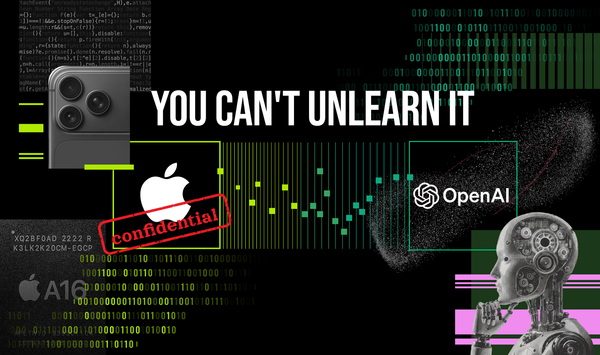
TL;DR: Next Tuesday Apple replaces its 11-year-old iPhone Upgrade Program with Apple Upgrade, a Klarna-backed lease. It arrives a month after Apple raised Mac and iPad prices, with pricier iPhones expected in September. A lease does not make anything cheaper, it makes the number smaller. You cannot lease the cheap models, and Klarna, not Apple, carries the credit risk.
Next Tuesday, according to Bloomberg, Apple will start leasing you its products. Apple Upgrade replaces the 11-year-old iPhone Upgrade Program with a Klarna-backed lease: 24 months on an iPhone or Watch, 36 on an iPad or Mac, a soft credit check, and the option to hand the device back, pay it off, or trade up after about a year. Apple is also closing new enrolment in its existing financing. The timing is the interesting part, because Apple raised Mac and iPad prices last month and September’s iPhones are expected to cost more again, and coverage of the new programme frames it explicitly as a way for customers to weather those increases. A lease does not make any of that cheaper. It makes the number you look at smaller. This is the oldest move in the car business, where sticker prices ran far ahead of what people would tolerate and the industry simply stopped selling the price and started selling the payment. A $300 jump in storage is a hard no as a lump sum and a shrug at eight dollars a month.
Two interesting points. The first is what you cannot lease: the iPhone 16, the entry-level iPad, the Apple Watch SE and the cheaper MacBook are all excluded, so only the premium models qualify, which tells you this is not a scheme to help people afford an iPhone, it is a funnel to move them up the range. Stripping AppleCare+ out of the package, which the old programme included, does the same work from the other direction: the advertised monthly number falls, and the coverage gets sold back to you separately. The second is who is actually carrying the risk. Apple looked at running its own subscription and financing service years ago and abandoned the project in 2024. By going through Klarna it gets the monthly relationship while Klarna gets the underwriting, the capital and the defaults, on somebody else’s balance sheet. Klarna’s stock rose 9% on the news, and its interest-bearing big-ticket loans are already up 138% year on year.
The average smartphone now lasts about 3.8 years, which is a problem when the iPhone is a $57 billion-a-quarter business, and the single most valuable thing a lease does is convert “I will replace it when it breaks” into a contract with an upgrade date printed on it. Halve that cycle and you have doubled how often each customer buys, without adding a single new customer. It also means the device comes back, so Apple captures a resale market it currently cedes to trade-in sites, and prices your monthly payment off what it expects a two-year-old iPhone to be worth. That is equipment-lease underwriting, pointed at consumers. There is a valuation angle too, because markets pay far more for predictable subscription revenue than for lumpy hardware sales, and Apple’s services arm already earns about $31 billion a quarter at roughly 75% margins. Turning device sales into 24 and 36-month streams makes the hardware look a lot more like the segment investors actually reward.
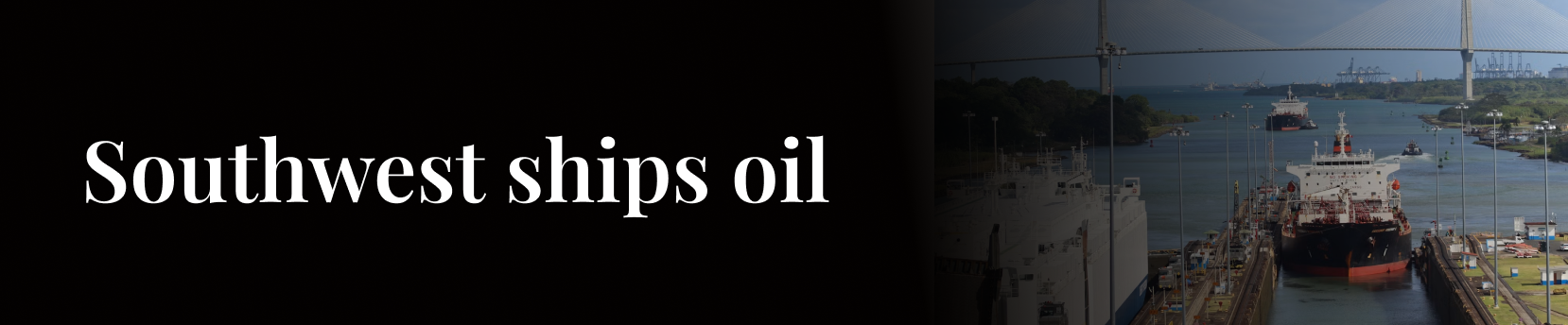
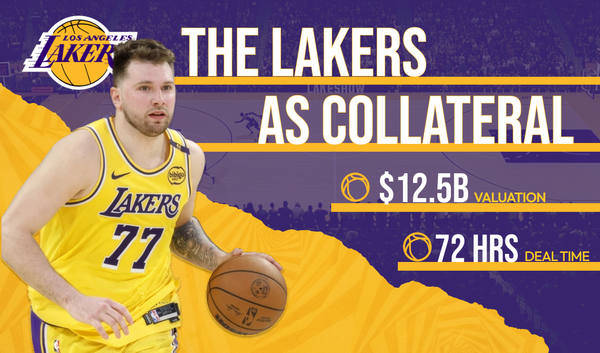
TL;DR: Southwest chartered a ship, filled it with jet fuel in Houston, sailed it through the Panama Canal and unloaded it in Los Angeles, a first for the airline. It hurts because US carriers spent the last decade abandoning fuel hedges, on the theory that American shale had made fuel cheap and boring. Then the war shut Hormuz. Southwest alone is eating $575 million in a single quarter.
This spring Southwest Airlines chartered a ship, filled it with jet fuel in Houston, sailed it through the Panama Canal and unloaded it in Los Angeles on May 28. It was the first time the airline had ever done it, and the cargo was about 12.6 million gallons, which sounds enormous until you learn Southwest burned 564 million gallons last quarter, so the entire voyage covered roughly a week of West Coast supply, or about two days of the airline. Its CFO described it, accurately, as arriving when supply was most constricted. That is what a fuel crunch looks like from the inside: not a shortage exactly, but a routing problem expensive enough to justify a boat and an international canal transit for a domestic delivery.
American shale kept jet fuel cheap and boring for a decade, so US airlines quietly stopped hedging, dropping the futures contracts that lock in fuel costs because paying for that protection had started to look like waste. The risk had not gone anywhere. It had gone quiet, which is not the same thing, and it is when insurance is cheapest. Then the war shut the Strait of Hormuz and an entire industry discovered simultaneously that it was uninsured. Southwest alone says fuel added $575 million of cost in the third quarter, a $1.12 hit to earnings per share. Carriers have responded by scaling back capacity growth, which conveniently lifts fares, and executives said this month that demand is holding up and the higher fares will stick. So a decade of saved hedging premiums is being recovered from passengers in a single summer. Delta, incidentally, is the one major that bought an actual refinery back in 2012 and was widely mocked for it.
California makes all of this worse, because the world’s fourth-largest economy is effectively an island for fuel. Ocean on one side and mountains on the other make pipelines difficult and expensive, and a tough regulatory and fuel-standards regime made refining there progressively less economic, so two refineries have shut in the past year alone, Phillips 66 in Los Angeles and Valero’s Benicia plant, taking a few hundred thousand barrels a day of capacity with them. The state therefore imports a large share of its jet fuel, much of it from Asia and particularly South Korea, and shipments from Asia to California just hit their lowest in at least a decade. Los Angeles now carries the most expensive jet fuel in the country. There is a structural fix, a pipeline running from Texas to Arizona and southern California, and it is scheduled to open in 2029. Crises move in weeks and pipelines move in years, so until then the answer to a fuel shortage in the fourth-largest economy on earth is boats.
Last week a software developer in France opened his Amazon Web Services console and discovered he owed $34 billion, which was notable mainly because he had set his monthly budget cap at $36, a miss of roughly x944 million. He was not alone. Across the internet, AWS customers watched their estimated bills climb into the billions and then the trillions, one posting a screenshot of $1.5 trillion with the caption that his soul had left his body, another clocking month-over-month usage growth of 745,728,201,771%. It was a defect in the billing estimator, a unit-pricing error in the display layer, and nobody owed a cent. But for a few minutes teams were rotating access keys and shutting down servers, convinced they had been breached, because the alerting systems built to catch a real overspend cannot tell one from a fake one. The scariest number in computing is not the real one. It is the fake one that looks real.
“Statistics are like a bikini. What they reveal is suggestive, but what they conceal is vital.” — Aaron Levenstein
Have a fantastic weekend. I welcome feedback and please forward this if you see fit.
Many thanks,
Sam.
Market Snapshots
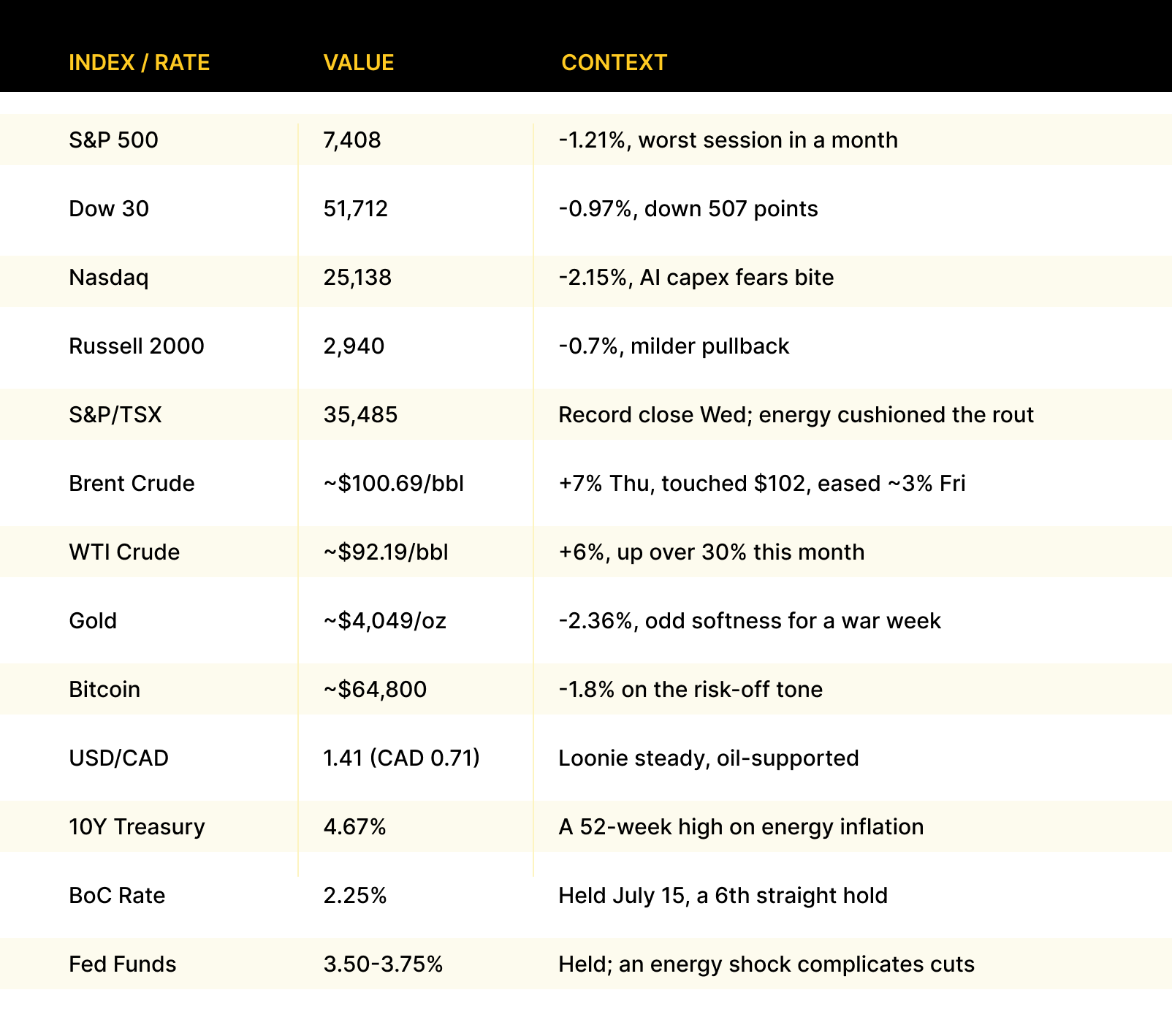
Note: two forces collided this week. Oil topped $100 for the first time since May on the Red Sea attacks, and the first big night of mega-cap earnings turned into a referendum on AI spending. Alphabet lifted its 2026 capex guidance toward $200B and fell 7%; Tesla promised a massive capex year and fell 14%; both posted negative free cash flow, and the Nasdaq had its worst day in a month. Bond yields hit a 52-week high as an energy-driven inflation scare pushed rate-cut hopes further out. Canada was the quiet winner: the TSX closed at a record on Wednesday, because an index heavy in energy and gold reads an oil shock rather differently than one heavy in technology. The Bank of Canada held at 2.25% on the 15th for a sixth straight meeting.
1 USD = 1.41 CAD = 0.88 EUR = 0.75 GBP at Thursday spot.
Sources
Olive Garden and Darden press materials, TODAY, Kotaku (opener); IRS Taxpayer Advocate Service, KPMG, Accounting Today, CPA Practice Advisor (World Cup tax); FT, Bloomberg, CNBC, NBC News, Al Jazeera, Trading Economics, Windward, Capital Economics (oil); Nikkei Asia, Fortune, The Next Web, Tom’s Hardware, Moody’s, S&P Global (Big Tech obligations); Bloomberg, MacRumors, 9to5Mac, eMarketer (Apple); CNBC, Vortexa, EIA (Southwest and jet fuel); Barron’s, AWS status page (closer); CNBC, Reuters, TheStreet, Motley Fool, Babypips, Yahoo Finance, Mining Weekly (market data).
Market data pulled Friday July 24, 2026 (July 23 closes). Live items this edition: the Iran conflict and oil price are moving hourly, and Brent eased about 3% on Friday after Thursday’s close above $100; Apple Upgrade launches July 28 and is reported by Bloomberg rather than announced by Apple, with monthly pricing not yet disclosed; the AWS billing figures were estimates only and no customer was charged; the World Cup tax exposure is a range that depends on match allocation. Currency at Thursday spot rates.