Curry picks Li-Ning, DeepSeek Vs American AI, Super El Nino, $570B in Classic Cars, European Pension Structure is Flawed

33rd Edition
Greetings folks and a warm welcome to the 33rd Edition of Friday Finance,
Last Saturday a 16-year-old boarded United flight 236 from Newark to Palma de Mallorca and named his Bluetooth speaker “BOMB”. About 90 minutes into the transatlantic crossing, another passenger spotted it in their device list. The crew gave everyone on board one minute to turn off their Bluetooth, and when at least two devices were still broadcasting after the deadline, the pilots squawked 7700, swung the Boeing 767 around over the Atlantic, and flew all 202 people back to Newark. Everyone left their bags on the plane, got bused to the terminal, and went back through security. Nearly 10 hours lost, the FBI now investigating, and the FAA able to fine $43,658 per violation, all because of a four-letter word. How expensive was that joke? Just like fuel prices, it really took off and burned through everyone’s patience. Let's get right to it.

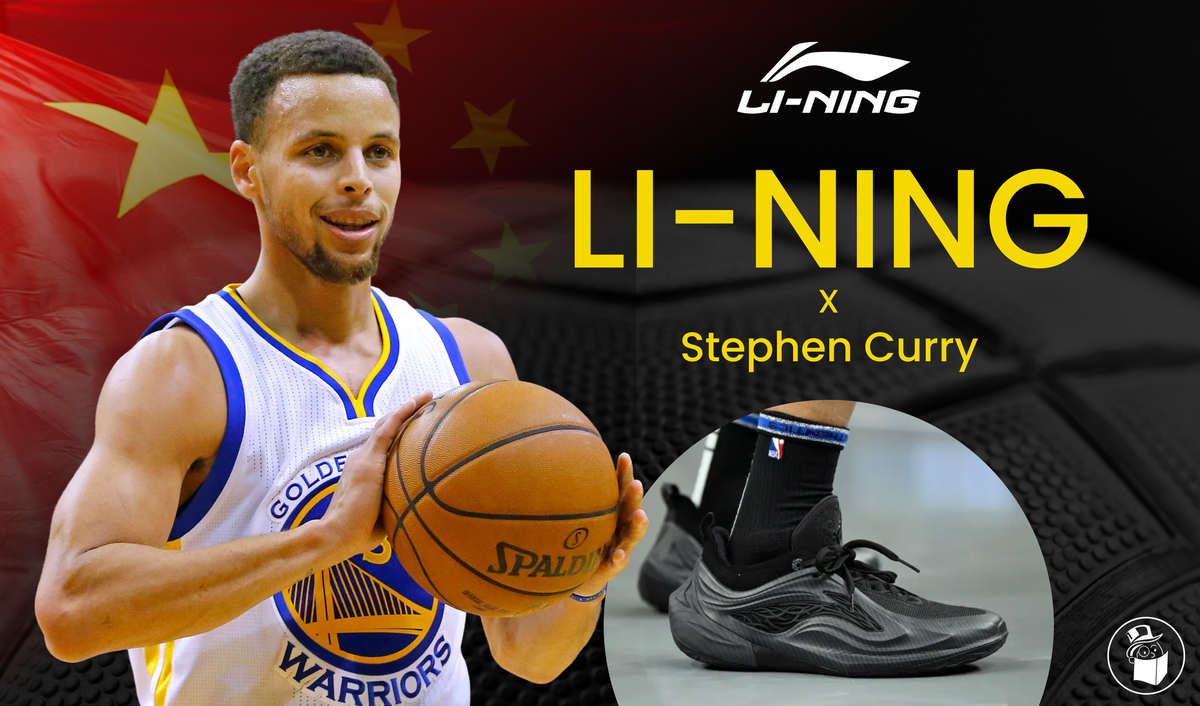
TL;DR: On June 1, Stephen Curry signed a 10-year shoe and apparel deal with Li-Ning, the Chinese sportswear company, over Nike, Adidas, and New Balance. The deal includes basketball, athleisure, a full golf line, and the right to sign other athletes under Curry Brand. Curry also walked away from roughly $37.5 million in unvested Under Armour stock to get here. The logic adds up when you look at the numbers. Nike has a China problem, and Li-Ning is the China solution.
Curry has spent his whole career betting on underdogs. In 2013 he left Nike, which had lowballed him, for a then-scrappy Under Armour. That bet paid off enormously: a 2015 deal reportedly worth $215 million plus equity, a signature line that Morgan Stanley once estimated could be worth $14 billion to Under Armour’s valuation, and a 2023 “lifetime” extension that made him president of Curry Brand and granted him $75 million in restricted stock. Then Under Armour’s stock fell roughly 50%, the shares hadn’t vested, and when Curry split with the company in November he left about $37.5 million on the table to become a sneaker free agent. He warmed up in Nike the next day, and everyone assumed he was going home.
Instead he signed with Li-Ning, a company most of his American fans can’t easily buy from. The reason is a big story in global sportswear: Nike’s Greater China revenue has fallen roughly 20% over the last four fiscal years, with one recent quarter down 17%. In 2020, Nike’s China business was more than triple Li-Ning’s. Today the Chinese market share table reads Anta 23%, Nike 20.7%, Li-Ning 9.4%, Adidas 8.7%, and Sportico calculates that on the current trajectory Li-Ning could outsell Nike in China by 2030. Western brands are bleeding share to domestic champions on the back of “Guochao,” the national-pride wave pushing young Chinese consumers toward homegrown labels. Li-Ning did about $4.3 billion in revenue last year at 50% gross margins, but over 98% of it came from inside China. Curry is the star they need to increase global market share.
This isn’t a shoe endorsement, it’s a capital-allocation decision by a 38-year-old at the end of his playing career. He gets to align with the brand winning the world’s largest sportswear growth market, a full golf line for his second act (he won the American Century Championship in 2023 and is a plus handicap), and the right to sign athletes under Curry Brand (Jordan Brand playbook). Li-Ning gets a Western superstar to globalise a business that is, today, almost entirely Chinese. The deal value is undisclosed, which tells you it’s less about the cheque than the strategy. Looks like both Curry and UA will be retiring soon.
TL;DR: DeepSeek, the Chinese lab that crashed Nvidia 17% last year, is closing its first-ever funding round, around $7.4 billion, with Tencent, battery giant CATL, and a state AI fund. Set next to Anthropic, OpenAI, and SpaceX/xAI, the interesting thing isn't the money. It's that the two sides are pursuing opposite strategies. The American labs are building closed, capital-intensive, premium-priced models. DeepSeek is open, cheap, and just made a 75% price cut permanent.
After resisting outside capital for 18 months, DeepSeek is raising roughly $7.4 billion in its first external round, with a strategic investor list: Tencent brings distribution, battery giant CATL brings energy, and a national AI fund brings the state, with NetEase and JD.com filling out the rest. Founder Liang Wenfeng is reportedly putting in a large amount of his own money to keep control. There is no roadshow and no retail frenzy. Compare that to the American side, where Anthropic just raised a $65 billion round and filed confidentially for an IPO, OpenAI keeps raising at eye-watering numbers, and SpaceX, now merged with xAI, is chasing a roughly $1.8 trillion public listing this week. The reported valuations put the US labs at something like 15x to 30x DeepSeek’s, but private valuations are negotiated marketing numbers, so the gap is a hint, not the headline. The real contrast is in strategy.
The American labs are making a closed, capital-intensive, premium bet: spend enormous sums on training and compute, keep the weights proprietary, and charge accordingly. DeepSeek is making the open, cheap, efficiency-first bet: release open-weight models and compete on price. The one number we can actually observe is the price. DeepSeek made the 75% cut on its flagship model permanent, and on published rate cards it now runs several times cheaper than comparable Claude and GPT tiers, in some cases by an order of magnitude. What we cannot observe is whether that is profitable. DeepSeek does not disclose reliable revenue or margins, and nobody outside the company really knows whether the low prices reflect a genuinely cheaper cost structure, heavy subsidy, or both. The architecture is real, the models reportedly run at a fraction of the compute of their predecessors and likely on Huawei chips to sidestep US export controls.
The bullish read on DeepSeek is the one its backers are making: a Chinese lab that is open-source and partly state-backed can afford to run on thin margins, or even at a loss, to win the developer base, the way Amazon ran retail. The bearish read is that nobody undercuts the entire market by 90% and prints money doing it. Two details do tie this back to earlier editions, though. The investor list includes a battery company, because, as the next article gets to, the binding constraint on AI is power. And in Ed 31 we wrote about Jevons’ Paradox, where making something cheaper increases how much of it gets used; if DeepSeek is right that radically cheaper tokens just mean developers spin up more agents rather than spending less. The American labs’ expensive, premium strategy might be commoditizing underneath them.

TL;DR: NOAA has an El Niño Watch in place, with an 82% chance the pattern emerges by July and a 96% chance it persists into winter. Forecasters see a real chance of a "super" event, with sea-surface anomalies projected as high as 3.2°C, which would match the most extreme on record. The last El Niño that strong, in 1877, drove a global famine that killed more than 50 million people. We can see this one coming in real time. The finance question is whether seeing it is the same as being ready, especially with oil still near $95 and a war in the Gulf.
El Niño is the warm phase of a Pacific climate cycle that reorders weather across the planet: droughts in Australia and Southeast Asia, floods in South America, disrupted monsoons in India. As of this week, NOAA has an El Niño Watch in place, with an 82% chance the pattern emerges between now and July and a 96% chance it lasts into the 2026-27 winter. The European model has projected sea-surface anomalies as high as 3.2°C in the key monitoring region by year-end, which would match the most extreme El Niños ever recorded. Sea-surface temperatures have already pushed past the “super” threshold. The next official update lands June 11, but the models are unusually aligned.
The reason this matters beyond the weather report is history. The strongest El Niño on record, in 1877-78, drove a global famine that killed more than 50 million people across India, China, and Brazil, roughly 3 to 4% of the world’s population at the time, the equivalent of 250 million people today. Colonial grain-export policies turned a drought into a mass death event. Nobody saw it coming because the phenomenon hadn’t even been identified yet. Later super events were merely expensive: 1997-98 caused an estimated $32-96 billion in global losses. The difference now is that we have 4,000 instruments in the Pacific and daily prediction models where 1877 had nothing. We can watch this one form. Whether watching it is the same as being prepared for it is the open question.
A super El Niño is arriving at the worst possible moment: oil still near $95 on the Iran war, fertiliser exports restricted, and transpacific shipping rates running about 40% above pre-crisis levels. The World Bank already flags agricultural price risks “tilted to the upside,” with cocoa, rice, sugar, coffee, and palm oil the most exposed. Australia is bracing for drought that could hit wheat exports; a failed Indian monsoon could pull 4-5 million tonnes out of global sugar; Brazil reckons El Niño could add 0.8% to its inflation. Here is the part markets underprice: there is a 6 to 12 month lag between the climate peak and the supply hit. The pattern peaks in late 2026, which means the empty shelves and the price spikes land in 2027 and 2028, long after the headlines move on.
For reinsurers, an El Niño year stacked on top of an active war is close to a worst case. Munich Re and Swiss Re both flag these years as materially more costly, and 1997-98 alone produced more than $30 billion (todays equivalent) in insured losses. Layer climate claims on top of war-risk claims and 2026 could be one of the most expensive years on record for the people who insure everyone else. Economists tracking the cumulative bill put global damages and lost productivity in the trillions by the end of the decade. In 1877 the problem was that nobody could see the famine coming. Fun fact, this phenomenon was referred to as El Niño de Navidad by Peruvian fishermen in the 1600’s, it means The Christmas Boy. Ironic.
TL;DR: Hidden inside the Great Wealth Transfer, which Cerulli now sizes at $124 trillion through 2048, is an interesting asset class: roughly $570 billion in classic cars, about 12 million enthusiast vehicles set to pass to heirs over the next 15 years. The total US collectible fleet is worth around $1 trillion in insurable value. But a car is the oddest thing to inherit. It is illiquid, it costs money every month to hold, you can't sell half of it, and it is wrapped in more emotion than any brokerage account.
The Great Wealth Transfer usually gets covered as stocks, houses, and cash moving from boomers to their kids. Cerulli now projects $124 trillion will change hands through 2048, with $105 trillion going to heirs and $18 trillion to charity. Tucked inside that number is a category nobody models: cars. Hagerty estimates roughly 12 million enthusiast vehicles, about $570 billion worth, will transfer to a new generation over the next 15 years, part of a US collectible fleet worth around $1 trillion in total insurable value. Unlike almost everything else in an estate, a collectible car is a physical object that demands storage, maintenance, and regular driving just to stay alive. As one dealer put it, Fabergé eggs these are not.
That makes it a negative-carry asset with feelings attached. One man spent about $40,000, a multiple of the car’s market value, keeping a 1965 Studebaker running for two decades before finally selling it. A 1962 Jaguar E-Type bought for £700 in 1972 needed £4,500 in engine work last year, with a clutch and gearbox still to come. The market has a 30-year rule: the car you had on your bedroom wall as a teenager becomes attainable about three decades later, which means values rotate with demographics. As boomers age out, their beloved ’60s chrome softens while ’90s cars appreciate.
The practical mess is the inheritance itself. Vintage values can swing enormously between the day a will is drafted and the day the owner dies, so vague estate planning turns siblings into litigants. Probate attorneys describe disputes over a single car getting genuinely ugly, and restoration shops say they end up “playing therapist” among heirs who can’t agree on whether to keep, sell, or restore. The tax man, oddly, is mostly absent: there’s no US federal inheritance tax, the estate tax only bites above $15 million, and heirs owe tax only on the gain if they sell above the value at death, which usually won’t happen. So the cost isn’t tax, it’s carry, and the deeper problem is generational. It’s the only asset class where the appraiser, the grief counsellor, and the probate lawyer all show up to the same garage.

TL;DR: European inequality used to run east-west. Now it runs old-young. The continent spends about a quarter of its GDP on age-related costs, the ratio of workers to pensioners has collapsed from over 5-to-1 in 1960 to about 2.5-to-1 today, and a generation that can't afford to move out is taxed to fund the retirements of the generation that bought their houses cheap. Europe's pensions are pay-as-you-go rather than funded like America's, there's no capital pool to build the next Nvidia.
For decades, European inequality was horizontal: the rich west drove BMWs while the poorer east queued for bread. Three decades of catch-up growth ended that joke, and now the divide runs vertically, up and down family trees. Young Europeans can’t move out because housing has climbed 25% in a decade even after inflation, and among those born in the 1980s, nearly a quarter still lived with their parents at 30. Meanwhile they pay heavy taxes to fund pensions for a generation that retired early and lives long. The Economist’s framing is blunt: the European welfare state looks like a pyramid scheme, and the baby boomers are its pharaohs, having granted themselves generous pensions on the back of demographic trends that have since evaporated.
In 1960 there were over five workers supporting each pensioner in western Europe. Today there are about 2.5, and by 2050 there will be roughly 1.5. The old-age dependency ratio climbs from 36% to 55% over the same window, and age-related spending already eats around a quarter of EU GDP. None of this mattered while the population was growing, but Europe’s population is now set to shrink, partly because the boomers themselves started the trend of having fewer kids. The only quick fixes are importing migrants, which has poisoned the politics, or making the young fund both their parents’ pensions and their own. The politics tilt grey too: the median voter in France’s last presidential election was 52, and as one demographer put it, the future of democracy is increasingly decided by voters who don’t have one.
The pension structure itself explains why Europe has no big tech. In America, Japan, and Korea, retirees largely fund themselves through private pensions saved during their careers, and in the US those trillions became the capital pool that feeds venture capital and private equity and let American firms grow into behemoths. Europe’s pay-as-you-go system means today’s pensions are paid by today’s workers, so there is no comparable pile of investable capital, which is one structural reason the continent has no answer to the Magnificent 7. Canada partly dodged this: the Canada Pension Plan is funded, with the CPPIB investing more than $700 billion, which looks a lot smarter from here than it did when it was set up.
Pope Leo XIV, the first American pope, spent most of his life as Robert Prevost of Illinois before ascending to the throne of St Peter. This week the state of Illinois caught up with him. An official tracked down $8.65 sitting in a forgotten PayPal account from his civilian days and formally presented the sovereign of Vatican City and leader of 1.4 billion Catholics with his unclaimed property. The man who used his first encyclical to warn that artificial intelligence must be “disarmed” apparently still had $8.65 parked in a fintech app.
"Money, if it does not bring you happiness, will at least help you be miserable in comfort." — Helen Gurley Brown
Have a fantastic weekend. I welcome feedback and please forward this friends and family.
Many thanks,
Sam.
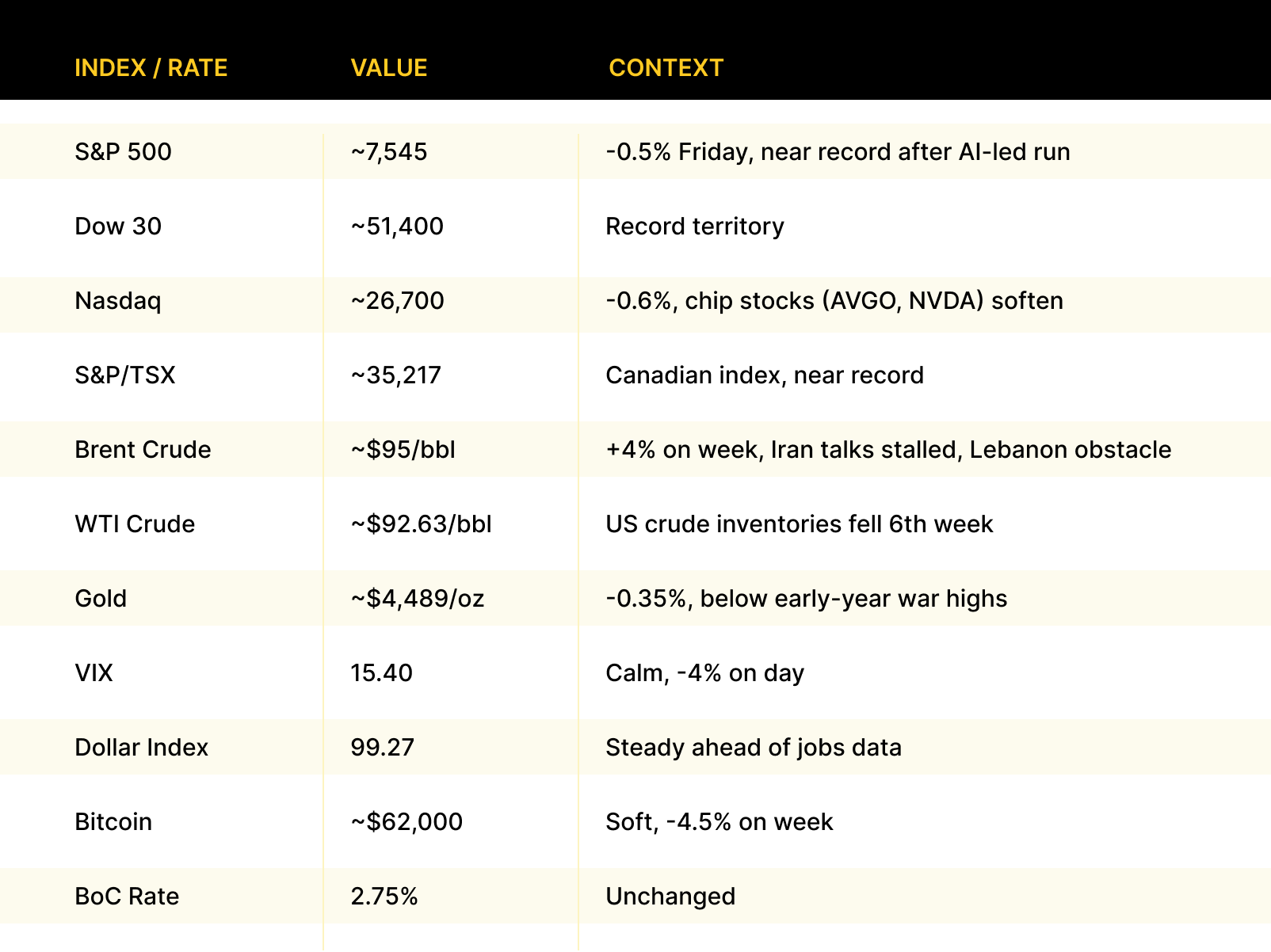
Market Snapshots
Sources
ESPN (Shams Charania), NPR, Reuters, CNBC, Bloomberg, Bloomberg Businessweek (Hannah Elliott), The Economist, SCMP, Sportico, The Athletic, WWD, Retail Dive, Front Office Sports, VentureBeat, CTOL Digital, Yahoo Finance, NOAA Climate Prediction Center, ECMWF, WMO, World Bank Commodity Outlook, Munich Re, Swiss Re, Cerulli Associates, Hagerty, Broad Arrow Group, Credence Research, Bruegel, European Commission 2024 Ageing Report, ECB, Eurostat, CaixaBank Research, Club Landoy, ABC News, CNN, Tech Times, Simple Flying, TheStreet, Trading Economics, Investing.com, Wikipedia.
Market data pulled Friday June 5, 2026 at noon PT. El Niño probabilities per NOAA CPC (next update June 11). Currency at Friday spot rates.