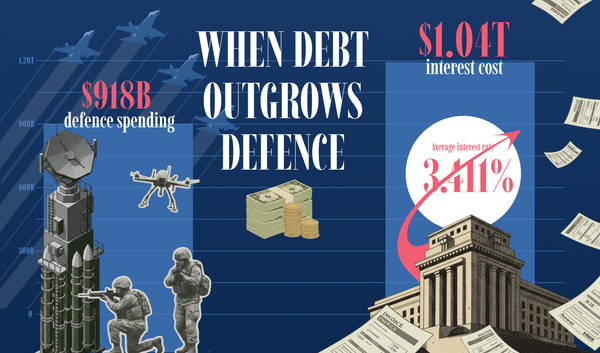
Singapore selling evidence, Refund on Love, Surveillance Wages, 50% tariff on salt and 'Associate' EU membership?

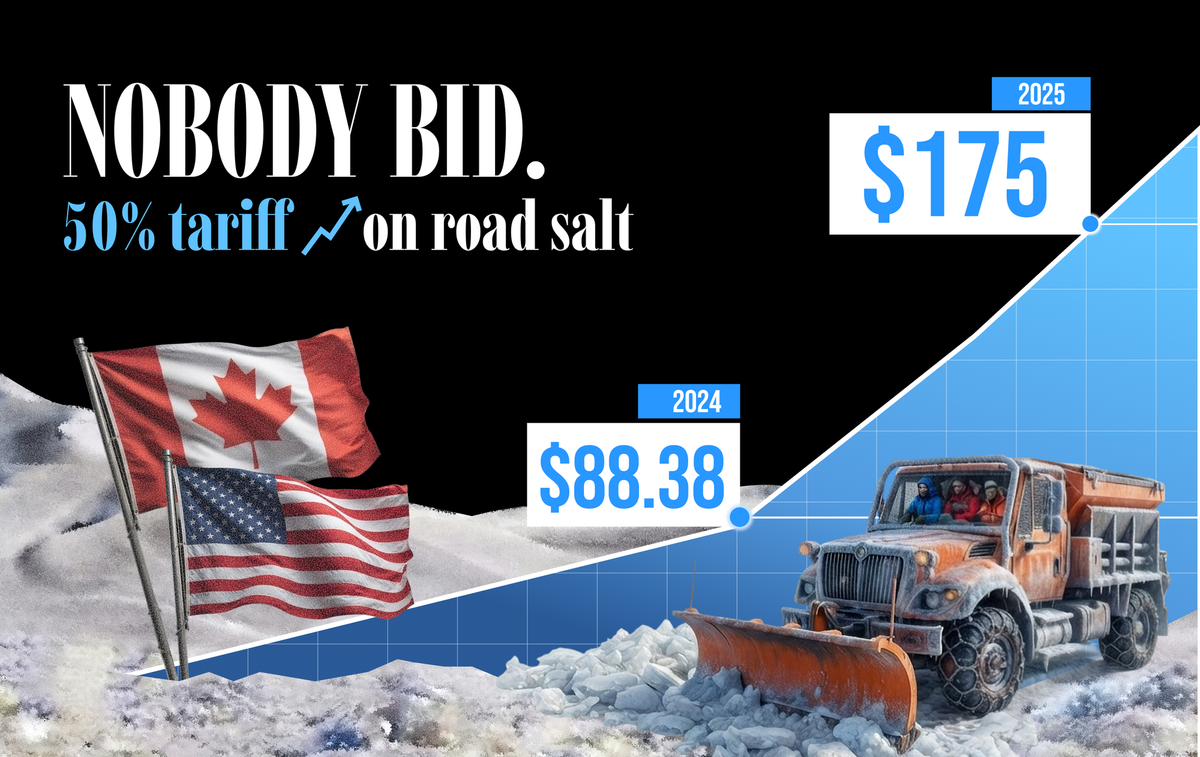
48th Edition
Greetings folks and a warm welcome to the 48th Edition of Friday Finance,
A 9 year-old who runs a Minecraft channel called Mighty Mike Plays has reportedly spent about $118,000 on YouTube advertising using his father’s company credit card. It started with a $20 promotion his father set up to show him how it worked, on a card saved to the family’s shared Google account. The boy then ran his own campaigns for three weeks before anyone in the finance department noticed, at which point his father asked to explain the missing money. His father works in marketing. Asked whether he had anything to say to his viewers, the 9 year-old said he was definitely cooked. I am curious to know if his dad kept his job. Let's get right to it.

TL;DR: Singapore is auctioning more than 80 properties and a thousand luxury items forfeited in its largest money laundering case. The first two jewellery sales are expected to raise S$3.9M; a single penthouse carries a guide of S$25.3M. The sales are spread across 15 auctions to avoid flooding the market, and the state has been paying the service charges for three years.
Three years after raids involving more than 400 officers, Singapore has begun selling what it seized in its largest money laundering case. More than 80 properties and over a thousand watches, handbags and pieces of jewellery, viewable by collectors in a windowless room inside the high-security Freeport near the airport. The first two luxury sales are expected to raise up to S$3.9 million. A single 6,727 square foot penthouse in the Norman Foster-designed South Beach development carries a guide price of S$25.3 million. The handbags are the story people click on; the condominiums are the money. Deloitte, appointed by the police to run the disposal, is spreading the goods across 15 auctions running to next May, in its own words to avoid flooding the market. There are roughly 250 Hermès handbags alone, enough for two standalone sales.
Singapore auction listings hit a 5 year high in the first half of this year at 292, and 13 sold. That is a success rate of about 4.5%, or 1 in 22. An auction room there is not where distressed stock clears at a discount, it is where a price gets tested in public while the sale happens somewhere else, and Deloitte says plainly that it will also use tenders, expressions of interest and direct sales. The raids were in August 2023, Deloitte was appointed in July 2025, the 1ST auction was this month and the programme runs to mid-2027, which is about 45 months from raid to disposal. The police reportedly spent more than S$600,000 maintaining the assets in the 2023 financial year alone, and service charges, insurance, security and storage accrue on 80 homes and a 1,000 watches.
The pricing decision is the most interesting part. Most of the objects are in good condition and indistinguishable from equivalent items on the resale market, and the auction house has valued them as such, on the view that their origins will have little effect on the final price. In most auctions provenance adds value, since a watch owned by someone famous fetches a Here it is neutral at best, so the strategy is to sell the state’s own evidence as anonymous stock. It does not work on everything: one 18-karat gold ring is engraved with initials matching one of the convicted men. About S$1.4 billion of cash and liquidated proceeds had already reached Singapore’s Consolidated Fund by the close of the 2025 financial year, against roughly S$1.25 billion of non-cash assets still to sell. In November 2024, in return for Interpol notices against them being withdrawn, 15 suspects surrendered S$1.85 billion. Maybe I can finally afford a Birking man pursue like Haaland.

TL;DR: A crypto billionaire is suing an actress and her parents for the return of a $4.5M betrothal (contract to get married) gift. The better story is that he publicly disputed his own $8.5B Forbes valuation this month, arguing for a 75% liquidity discount because he cannot sell. His wealth exists only while he does not touch it, which is what the stunts are for.
Justin Sun, the founder of the Tron blockchain, is suing the Chinese actress Jing Tian and her parents to recover more than 30 million yuan, about $4.5 million, which his lawyer describes as a betrothal (I had to look this up, means contract or promise to get married) gift made while the couple were discussing marriage. A court in Xi’an has accepted the case and Sun has applied to freeze the disputed assets. Jing and her parents have challenged the court’s jurisdiction, so nothing has been heard on the substance, and she has said publicly that she has never sold her love for money and never will. What makes it more than a celebrity story is what Sun did on the same day his lawyer confirmed the filing. He published a ten-thousand-character account of the relationship, labelled it purely fictional at both ends, waived the copyright and invited people to circulate it.
He bid $4,567,888 for a charity lunch with Warren Buffett in 2019, postponed it in a way that generated weeks of headlines, and later apologised for excessive marketing. In 2024 he paid $6.2 million for a banana taped to a wall and ate it. Forbes valued him at $8.5 billion and he publicly disputed the figure, arguing for a 75% liquidity discount because he could not sell the position at prevailing prices. He is right, and it is the most revealing thing he has said all year. He holds something like 10 to 15% of a token with a $31 billion market capitalisation, which is both what makes him a billionaire and the asset he can least afford to sell.
The SEC sued him in 2023 alleging unregistered securities sales and a wash-trading scheme. In November 2024 he became the largest investor in World Liberty Financial, the Trump family’s crypto venture, with $30 million, later adding roughly $75 million more and reaching nearly $700 million in holdings. The case was paused in 2025 and settled in March, with a $10 million penalty paid by an affiliated company and every claim against him personally dismissed with prejudice and no admission of wrongdoing. The SEC says politics played no part (LOL). Then World Liberty froze wallets linked to him, he sued it for fraud in April over holdings reported at between $320 million and $1 billion, and it countersued him for defamation in May. That case is still ongoing, but will be interesting. If you can spend $6.2M on a banana then you can surely spend $4.5M for love. Also gives you sense of his priorities.

TL;DR: More than 40 bills across at least 24 states this year would stop companies using personal data to set individual prices. Almost none covers what you are paid. Colorado's does, and its title says both words. The lowest wage you will accept was the last piece of private information a worker had.
American state legislators have introduced more than forty bills across at least 24 states this year to stop companies using personal data to set individual prices, already more than in the whole of 2025. New York now requires retailers doing it to post a notice in capital letters saying the price was set by an algorithm using your personal data. California’s attorney general has been writing to retailers, grocers and hotels asking how they use browsing history and location to decide what to charge, and a bill there would make the practice illegal outright at $12,500 a violation. All of it concerns what you are charged. Almost none concerns what you are paid, despite being the same technique, the same data and the same arithmetic aimed at the other side of the transaction. As Lindsay Owens of the Groundwork Collaborative puts it, workers are consumers too, and if it works on consumers it works on workers.
Surveillance wages, means pay set not by performance or seniority but by formulas running on personal data, often gathered without the worker knowing. An audit of 500 workforce-management AI companies, published by the Washington Center for Equitable Growth last August, found employers in healthcare, customer service, logistics and retail buying from vendors whose tools are built to enable it. The authors are careful to say they are not alleging every customer uses them that way, and Colgate-Palmolive and Intuit both deny doing so outright. What makes it more than a privacy story is the economics. The lowest salary you would accept is what economists call your reservation wage, and the whole bargaining surplus in a negotiation exists because the person across the table does not know it. Remove that and the surplus does not disappear, it transfers. It also transfers in one direction only, since the employer learns your floor and you still know nothing about their ceiling.
A labour advocacy group quoted in the reporting says some systems treat signals of financial difficulty, a payday loan or a large credit-card balance, as evidence of what a candidate will settle for, which means being short of money lowers the offer and keeps you short of money. The clearest illustration comes from nursing: a Roosevelt Institute study of 29 gig nurses found staffing platforms setting pay shift by shift, nurses receiving different amounts for identical work at the same hospital, and the systems learning from each acceptance to calibrate the next offer. ShiftKey, one of the platforms named, says it unequivocally does not use data broker services or engage in surveillance-wage setting, and disputes that it uses debt data at all. Uber, whose drivers report being shown different base fares for the same trip, says its pricing uses time, distance and demand and not individual driver characteristics. Colorado has a bill that would ban using payday-loan history, location data or search behaviour to set pay, while carving out wages tied to measurable productivity. Its title is the Prohibit Surveillance Data to Set Prices and Wages Act.
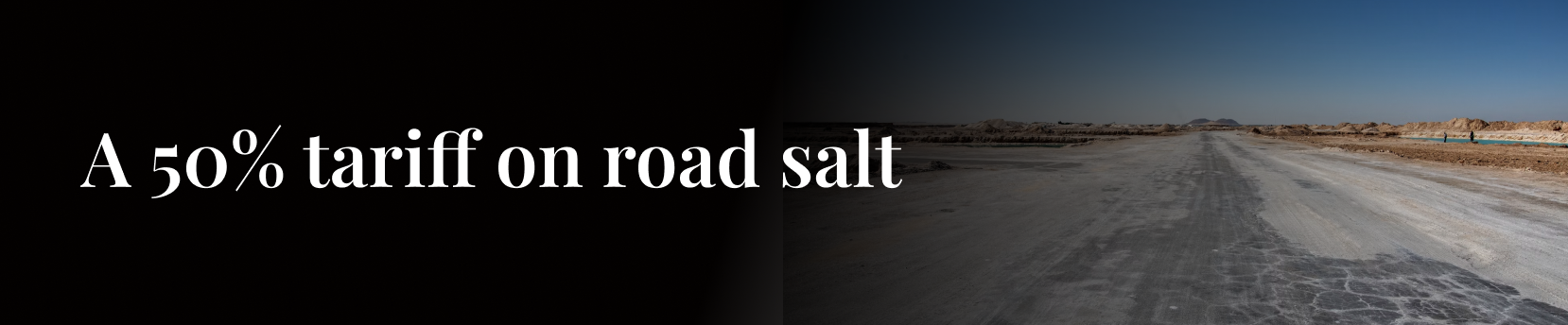
TL;DR: A 50% duty on Canadian salt landed in August, inside the summer bid season that sets winter road-salt prices. The bids are now in. One West Virginia city received no bids at all and authorised purchases at up to $175 a ton against $88.38 last year. But the market was already short before the tariff arrived.
In July the United States invoked Section 338 of the Tariff Act of 1930, a Depression-era provision, to impose a 50% duty on a list of Canadian goods from late August, and customs guidance confirms salt is on it. The timing mattered more than the rate, because American municipalities lock in winter road-salt prices during the summer bid season, and the duty landed inside the window. The bids are now in. Weirton, West Virginia, which had secured bids in each of the previous five years, received none at all this time, and its council has authorised the city manager to buy from whoever is available at up to $175.00 a ton delivered. Its July 2025 contract was $88.38. A municipality writing itself a blank cheque at roughly double last year’s price, with nobody bidding, is a reasonable definition of a market that has stopped working.
Salt has almost no capacity to respond. It is not traded on a liquid spot market, it is sold through contracts negotiated months before the first snowfall, and you cannot open a mine before December, so when supply cannot move the entire adjustment happens in price. The buyer, meanwhile, is a town council with a fixed budget and a legal duty to keep the roads open. The US Geological Survey lists highway deicing as about 41% of American salt consumption, notes that Canada supplies 29% of imports and imports are 27% of what the country uses. Rock salt leaves the mine at about $56 a tonne. It cannot be recovered, it dissolves into the watershed, and 41% of national demand is consumed irreversibly every winter.
Smiths Falls, Ontario, which the American duty does not touch, has just signed a five-year contract at C$134.82 a tonne, a 26.2% increase, after Lanark County received exactly one bid because Cargill and Windsor Salt both declined to bid on supply constraints. The one-year option was C$174.14, meaning the market charged roughly 63% more for a short commitment than for a five-year one, which is what suppliers do when they expect scarcity to persist. Last winter the town could not obtain salt even while under contract, and blended what remained with sand. Compass Minerals has signalled price increases of around double digits for this winter and K+S raised its guidance citing de-icing demand. The duty arrived on a market that was already short, which makes it an accelerant rather than a cause, and the municipalities paying for it cannot tell the difference. Who knew salt can be this exciting.

TL;DR: The European Commission president offered Canada a status that does not exist and is not hers to grant. The trade deal that does exist has been provisionally applied for nine years because 10 member states have not ratified it, including the country where it was signed. The EU takes about 5% of Canadian exports against the US at 68%.
Ursula von der Leyen told the European Parliament this month that she wanted to open the door for Canada to become the EU’s first associate member, and got a standing ovation with Mark Carney sitting in front of her. The associate membership does not exist, cannot be created without the agreement of all 27 governments, and is not in the Commission president’s gift. Berlin suggested within hours that the term be reconsidered. One Brussels diplomat said it was classic von der Leyen, promising first and seeking approval later, and another predicted the idea would die in negotiation. Her own aides had reportedly been revising the wording repeatedly beforehand. The trade commissioner, Maroš Šefčovič, then named the price out loud: there would be no special treatment, because Norway and Switzerland follow EU rules and pay into the shared budget, and single-market rules are the same for everyone.
Associate status is not a gift, it is rule-taking plus a cheque, meaning adopting single-market law you have no vote on and paying for the access. Whether that suits Canada is a real question; whether Europe could deliver it is a different one. CETA, the ordinary Canada-EU trade agreement, was signed in Brussels in October 2016 and has been provisionally applied since September 2017, and after 9 years only 17 of the 27 member states have ratified it. The 10 that have not include France, Italy and Belgium. There is no deadline. Around 90% of the agreement is operating, but parts of the investment, financial services and intellectual property chapters are not, which happen to be the chapters that matter most to anyone actually moving capital across the Atlantic.
Canada sent C$298.2 billion of goods to the United States in the first half of this year, 68% of its merchandise exports, and the European Union takes about 5%, the same as China. Replacing the American market with the European one would mean growing EU exports roughly 13x. 50% tariffs now in force cover about 5% of Canada’s US-bound exports, which BMO reckons could cost half a percentage point of GDP growth, and the entire EU relationship is also about 5% of exports. In fairness the diversification is real, with non-US exports up 11.1% last year and their share at 32.8%, the highest in more than four decades. It is also worth knowing what drove it: gold, crude oil and critical minerals. While we don’t know what Associate Membership means and I think the free movement of people will be a good start.
LeBron James will earn about $3.9 million playing for the Philadelphia 76ers this season, the lowest salary he has drawn since his rookie year, after taking a reported $48.7 million pay cut to join a contender. Polymarket is reportedly paying him $15 million a year to talk about football. He is an endorser rather than an investor, and under the terms he will not promote basketball at all, which is the carve-out that makes the arrangement permissible. Over the summer, more than $273 million in contracts tied to his free-agency decision traded across prediction markets, over $40 million of it on Polymarket.
“Price is what you pay. Value is what you get.” — Benjamin Graham
Have a fantastic weekend. I welcome feedback and please forward this if you see fit.
Many thanks,
Sam.
Market Snapshots
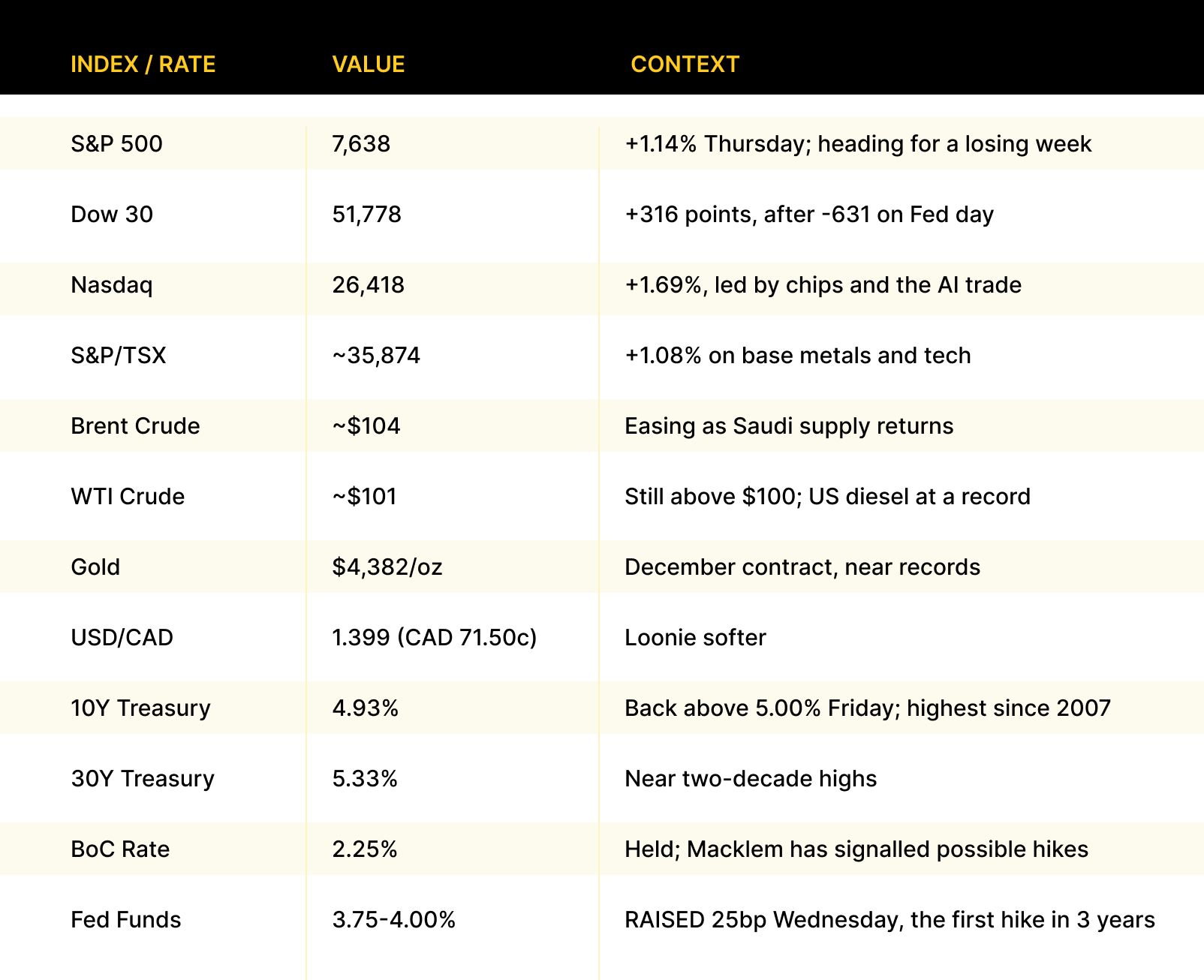
Note: the Federal Reserve raised interest rates on Wednesday for the first time in three years, a unanimous quarter-point move under Kevin Warsh, and signalled one or two more before year-end alongside upward revisions to its inflation and growth projections. Markets did not enjoy it. The Dow fell 631 points on the day, energy dropped 3%, and the ten-year yield closed above 5% for the first time since 2007. Thursday reversed most of it, with the Dow up 316 and the Nasdaq up 1.7% as oil eased on reports of Saudi crude returning and the ten-year snapped an eight-day rising streak, and then Friday morning the ten-year climbed back above 5% again and the S&P headed for a losing week. Brent is around $104 and American diesel prices hit a record high, which is the part of the inflation story that reaches everyone. Jamie Dimon's assessment was that it is not clear the fight is over. The Bank of England held at 3.75%. In Toronto the TSX fell to a one-month low on Fed day and then rebounded 1.08%, with gold, silver and copper miners doing the work and Dollarama up 5.5% on earnings. The Bank of Canada remains at 2.25%.
1 USD = 1.399 CAD = 0.88 EUR = 0.75 GBP at Thursday spot.
Sources
Dexerto, Tom's Hardware, GamesRadar, Video Games Chronicle, NewsNation, CreatorDB (opener); CNN, Deloitte Southeast Asia, The Star, CNA, TRIBE, Hotlotz, Straits Times (Singapore); Wall Street Journal, SCMP, Shanghai Daily, CoinDesk, Reuters, Forbes (Justin Sun); MarketWatch, Washington Center for Equitable Growth, Roosevelt Institute, Covington, Paul Weiss, IDC (surveillance wages); Crux Investor, US Geological Survey, Discovery Alert, Smiths Falls council reporting, Weirton council reporting, Compass Minerals, K+S (salt); Financial Times, European Commission, Global Affairs Canada, Statistics Canada, BMO, EY (EU and Canada); Front Office Sports, CBS Sports, Yahoo Sports, The Block (closer); CNBC, Bloomberg, BNN Bloomberg, Canadian Press, Schwab, Trading Economics, Bank of Canada (market data).
Market data pulled Friday September 18, 2026 using September 17 closes, with Friday morning's moves noted. Live items this edition: the $118,000 in the opener comes solely from the father's own video and has not been independently verified, though viewers were reporting half-hour gaming videos arriving as paid ads a fortnight before he spoke; Singapore's property auctions on September 23 and the first luxury tranche closing September 20 both fall after publication, so the results are unknown; every allegation in the Justin Sun and surveillance-wages pieces is unproven and the denials are carried in full; the Colorado bill has not passed; and Canada's retaliatory tariffs and the Section 338 duties remain in force with no resolution announced. Currency at Thursday spot rates.