LIV becomes employee owned, Starlink Mobile, 2,000 year trade history, its a service fee not a toll, Saudi-Turkey-Pakistan pact

42nd Edition
Greetings folks and a warm welcome to the 42nd Edition of Friday Finance,
T-Pain explained this week why he sold his music catalogue, and the arithmetic is hard to argue with. The buyers showed him what the catalogue earned in a year and offered him roughly a hundred years of it up front, reportedly north of $100 million, which he says took about as long to decide as it takes to read. His reasoning was not that the songs were finished but that he never controlled what they cost: streaming took music from about a $1.00 a song to roughly a third of a cent ($0.003) a play, some 333 plays to match one old sale, and the platforms keep revising it down without asking. Owning an asset whose price somebody else sets, and keeps cutting, is not really ownership. Let's get right to it.
TL;DR: Saudi Arabia spent about $5.3B building a golf league, then walked. The rescue is being led by a credit fund, via a likely pre-packaged bankruptcy. The key structural fact nobody mentions: the PIF funded LIV through loans, not equity, so its $5B is debt. The players lured with guaranteed money are now being asked to swap those guarantees for stock in the league that couldn't pay them.
Saudi Arabia’s sovereign wealth fund spent about $5.3 billion over five seasons building a rival golf league, and in April it stopped, saying the money required no longer fitted its investment strategy (ie the war in Iran is costing us too much). This week LIV Golf said it had signed a term sheet with a lead investor to fund a smaller operation through 2030, and the rescuer is the credit arm of BC Partners. LIV was burning roughly $100 million a month, and the package being assembled is somewhere around $250 to $350 million, which is about three months of the old run rate. The crucial detail sits in the structure. The PIF funded LIV through loans rather than equity, so its $5 billion was never an investment in the ordinary sense, it was debt stacked on a business whose 2026 prize money alone runs to $470 million against perhaps $100 million of revenue across five events, and which never landed the American television deal.
Which is why the endgame is a bankruptcy, and why the bankruptcy is the point rather than the disaster. The likely route is a pre-packaged filing, where a court process strips the legacy liabilities quickly so new money arrives unencumbered. Nobody wants to buy LIV Golf. They want to buy LIV Golf minus five billion dollars of obligations, and a pre-pack is the only option. The restructuring advisers, Ducera, Gibson Dunn and AlixPartners, arrived before the investor did, which is usually the giveaway, and you do not hire AlixPartners to grow. BC Partners’ credit desk rather than its buyout arm tells you roughly what the equity is now worth ($0). The complication is who else is in the creditor queue. Several players still hold guaranteed contracts running past this month, and Jon Rahm, reportedly still owed as much as $150 million, would be the largest creditor of all.
LIV recruited the best golfers in the world with the one thing the PGA Tour could not offer, guaranteed money, paid whether you finished 1ST or 51ST. The restructuring now proposes converting those guarantees into equity, with the players collectively owning a majority of the new tour, which is a debt-for-equity swap: creditors give up their claims and take stock instead. The men who were paid precisely so they would never have to take risk are being handed the residual risk of a lossmaking golf league. Early defectors were reportedly paid half or more of their contracts up front, while Rahm’s was backloaded, apparently because of the uncertainty around the PGA-PIF talks when he signed. Payment timing was the real risk allocation all along, and almost nobody priced it that way. One thing is certain, the era of sportswashing is officially over.
TL;DR: SpaceX used its first earnings call as a public company to confirm it is building a terrestrial mobile network, and the carriers slipped. Every objection they raise is true and beside the point: spectrum is sold at auction, and auctions are won by whoever has the cheapest capital. SpaceX trades at roughly 77x revenue, AT&T at 1.6x. Though the market has started repricing that weapon.
On its first earnings call since June’s record listing, SpaceX confirmed it intends to build an actual terrestrial mobile network, and shares of AT&T, Verizon and T-Mobile slipped. It already owns the raw material: 65 megahertz of spectrum bought from Charlie Ergen’s EchoStar for about $19.6 billion, licences he had sat on for years and which rarely come to market. Musk does not buy the operating company, he buys the scarce input and builds the rest himself, the way he built the rockets, the dishes and the routers rather than buying any of them. Carriers have refused to rent him their networks the way they rent them to Charter and Comcast, leaving him to construct one across thousands of towers and small cells, a job that will take years. They have also formed a three-way joint venture for satellite-to-phone service that reportedly has no definitive agreement, no capital commitment and no timeline, which is what you announce when you need to show shareholders a plan before you have one.
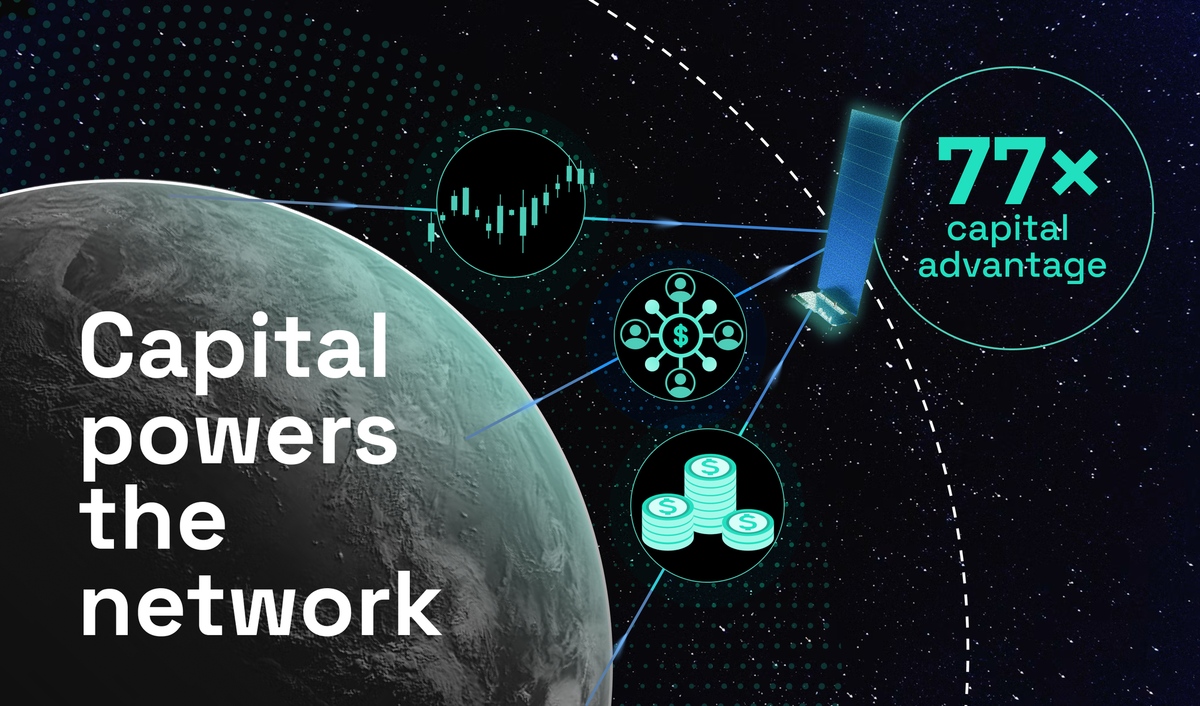
Every objection the incumbents raise is true and mostly beside the point. Building a network is hard, Starlink’s satellites are poor in dense cities, and SpaceX has never operated in this industry. But spectrum is handed out by auction, and auctions are won by whoever has the cheapest money, not the best engineering. SpaceX carries a market value of about $1.44 trillion against $18.7 billion of 2025 revenue, roughly 77x sales. AT&T trades at around 1.6x sales. For $1 of revenue the market hands one company about $77 of value and the other about $1.60, and when the two bid for the same block of airwaves they are paying in currencies nearly 50x apart in strength. The Federal Communications Commission has already set rules for an upper C-band auction next July, the most valuable midband spectrum left in America, with estimates of the take running from $30 billion to $75 billion, and AT&T and Verizon will have to borrow against mature cash flows already pledged to dividends and debt.
SpaceX is down about 29% since it listed in June, and its first quarterly report as a public company showed capital spending up sixfold to $18.4 billion, most of it going to AI rather than rockets. Its first lockup expired on Wednesday, freeing 911.5 million shares, and the stock rose 6% anyway on volume more than double its average. So the cost-of-capital advantage is real but no longer limitless, and the same investors cheering the spending are the ones who marked it down a third in seven weeks. None of which changes the position the carriers are in, because SpaceX’s arrival forces them to bid higher for spectrum they needed anyway and spend more to keep the customers they have. Even in the world where Starlink Mobile never holds a call properly in midtown, three incumbents now have permanently higher costs. In 2017 the boss of Fiat Chrysler said he remained unconvinced by the economics Tesla was pitching. Tesla is up about 1,900% since. Stellantis is up 43%.
TL;DR: A viral claim says the West has run a trade deficit with China for two millennia, and that today's surplus is therefore something deeper than policy. The individual facts are mostly real. The conclusion does not survive the data: the Roman case is an India story, there are 150 years of the exact opposite, and the silver-era flows were a monetary phenomenon, not a manufacturing one. China was importing its money supply.
A post doing the rounds this week argues that for more than two millennia the West has bought more from China than China has bought back, and that silver, then dollars, has flowed east to settle the difference ever since. It has the receipts, or seems to: Pliny complaining about bullion draining east, Spanish silver crossing the Pacific for porcelain, Britain paying for tea until opium reversed the flow. The implied conclusion is that today’s surplus, a record $1.2 trillion last year, is not really about subsidies or wages or currency policy at all, but about something older and more permanent. The individual facts are mostly right. The conclusion does not survive an afternoon with the data.
Start with Rome, because it is the weakest link carrying the most weight. Pliny’s line lumps three destinations together, India, China and the Arabian peninsula, at 100 million sesterces a year, and elsewhere he blames India alone for 50 to 55 million. Rome and Han China had essentially no direct trade; Chinese silk arrived transshipped through Indian ports and Parthian middlemen, which is why the archaeological evidence of the drain is Roman coin hoards found in India rather than China, and why Vespasian moved to ban gold exports to India. Angus Maddison’s estimates put India’s trade volumes well above China’s at the time. The post concedes the trade was indirect and then counts it anyway.
The bigger problem is what gets waved through as interruptions. The National Bureau of Economic Research, working through the customs data, finds that between 1865 and 1900 China was more likely to run a trade deficit than a surplus, with the gap covered by bullion or debt. From 1888 imports overtook exports, and between 1901 and 1913 the cumulative import balance ran to 1.6 billion taels. Add the Ming sea bans, add Mao’s rule and the eternal pattern turns out to be four discrete episodes with centuries of little trade between them and roughly 150 years of the exact opposite.
Then there is the part that actually matters, which is that the silver eras and the modern era are not the same machine. China had abandoned paper money and progressively put itself on a silver standard, and the Single Whip tax reform of 1580 required taxes be paid in silver, manufacturing enormous state-driven demand for a metal China barely produced, roughly 10 to 15% of what it imported. Silver traded at about 6:1 against gold in China and 12:1 in Europe, so the metal was worth double on arrival, which means silver went east because silver was underpriced money, not because Europe had nothing worth selling. One economic history puts the counterfactual bluntly: had China monetised gold instead, its incentive to export silk and porcelain and tea would have been much the same, because it would still have needed to import its money.
Today’s surplus has a different and well-documented cause, and it is arithmetic before it is politics. A country’s current-account balance equals its national savings minus its national investment, which is an accounting identity rather than a theory: whatever a country produces and does not consume or invest at home has to leave. Chinese household consumption has been stuck at roughly 34 to 40% of GDP for two decades, against about 68% in the United States and 50 to 55% across comparable Asian economies, while national savings run north of 40%. Michael Pettis has spent years making the point that the surplus is a symptom of suppressed household income rather than a trophy for competitiveness, and Beijing evidently agrees, because the current five-year plan sets a target to raise the consumption share to 45%.
The stock explanations, subsidies, cheap labour, weak intellectual property, currency management, genuinely do not explain the aggregate, and the India comparison is the proof: lower wages, weaker protections, heavy state intervention, and no comparable surplus, because Indian households are permitted to consume what India makes. Even mainstream analysis now says industrial policy explains which sectors China dominates, not why the total keeps growing. So the question is good and the answer is the boring one, not destiny but a household consumption share nobody has managed to lift. Meanwhile the surplus actually narrowed slightly in the first half of this year :imports grew faster than exports, driven by a record $135 billion of foreign semiconductors in a single quarter. After two thousand years of the West supposedly having nothing China wanted, it turns out China wants chips.
TL;DR: Iran and Oman have agreed coordinates for a shipping channel through Hormuz, but the negotiation has become a fight over a fee: Iran wants 5-7% of cargo value, Oman proposed 3%, Washington wants zero. On a laden supertanker that is $8-11M a crossing. Industry people say US sanctions make paying it impossible anyway, so the deal fails on plumbing rather than politics.
Iran and Oman have agreed the co-ordinates of a shipping channel through the Strait of Hormuz, the clearest sign in five months of war that the waterway carrying a fifth of the world’s oil might reopen. Ships would enter through Iranian waters and leave through mostly Omani ones, and Tehran’s deputy foreign minister puts the arrangement’s useful life at two to four months. The reason it has taken this long is that the strait is worth far more to Iran shut than open: open, it earns Tehran nothing, and closed it is the only asset that reliably brings Washington to the table, which is why Iranian officials now describe it as their main leverage. The traffic numbers show how complete the closure has been. Eight ships crossed on Tuesday, against roughly 130 to 140 a day before the war began in late February, a fall of about 94%.
What the negotiation has actually become is a fight over a fee. Tehran wants payments equivalent to 5 to 7% of the value of every cargo transiting the strait; Oman has been arguing for around 3%; Washington wants nothing at all, on the grounds that this was an open international waterway before the war. Iran has also proposed penalties of 20% of cargo value for violations, and a draft published this week would bar American and Israeli vessels outright and require countries it deems hostile to pay compensation before passage. Two analysts at ING noted drily that Iran wants to call these service fees rather than a toll. Do the arithmetic on a fully laden supertanker, two million barrels at about $82, and 5% of the cargo is roughly $8 million a crossing, 7% closer to $11.5 million, with a $33 million penalty for getting it wrong. That is not a customs charge. It is a rent on geography, and the reason a channel agreement keeps not becoming a reopening.
The deeper obstacle is that a strait is only open when the underwriters say it is. When Iran closed it in March, tanker rates from the Gulf to Asia hit their highest level since at least 2005, and the US Energy Information Administration attributes that to two things, the physical risk of being shot at and the cost of war-risk insurance, which insurers did not reprice so much as withdraw from entirely. The tell came when Washington promised naval escorts and the ships stayed exactly where they were, waiting instead for a federal insurance backstop, which is why the administration ended up instructing a government development agency to write political-risk cover the private market would not touch. Four people in the industry now say the sanctions and insurance restrictions attached to any fee paid to Iran make the proposed framework unworkable in practice, which is a very precise way of saying the deal could be signed and still change nothing. Brent sits around $82 and is heading for a 9% weekly loss, having been above $140 in April and below $73 in June. The politics can be settled in an afternoon. The strait still has to be cleared of mines. I call this winning, what do you think?
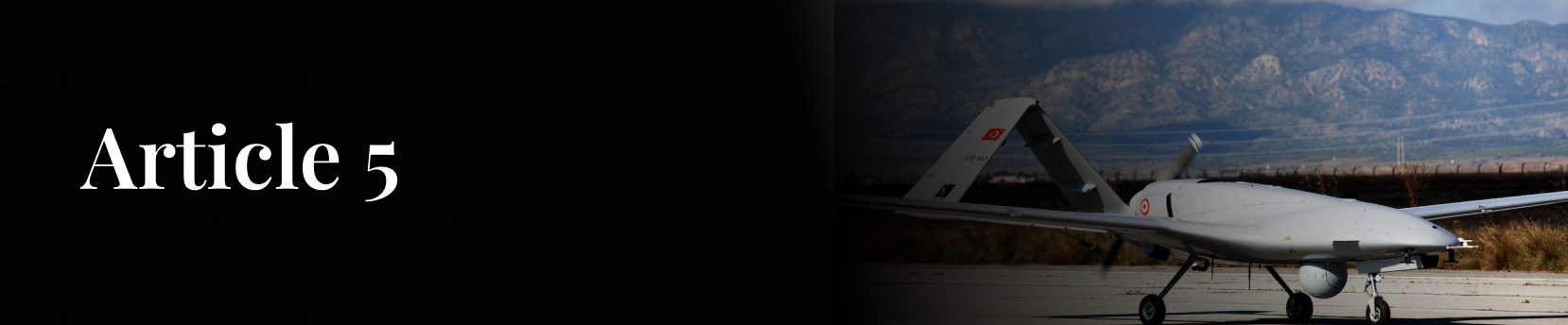
TL;DR: Saudi Arabia, Turkey and Pakistan signed a mutual-defence pact in Mecca using NATO's Article 5 language. Structurally it is a joint venture: Riyadh brings the capital, Ankara and Islamabad bring the production lines and the manpower. It lands in the middle of a Turkish defence-export boom, and Saudi Arabia's annual defence budget is about six and a half times everything Turkey sells to the world in a year.
Saudi Arabia, Turkey and Pakistan signed a mutual-defence pact in Mecca on Friday under which an armed attack on any one of them is to be treated as an attack on all three, which is the language of NATO’s Article 5 transplanted to the Gulf. Riyadh insists it is not a military axis or a sectarian bloc and has nothing to do with nuclear ambitions; Ankara calls it purely defensive and open to others joining later. What it looks like structurally is a joint venture. Saudi Arabia has the region’s largest defence budget, around $72.5 billion last year, and a war that has just demonstrated it cannot convert that budget into enough protection. Turkey has a production base and wants export markets. Pakistan has a large battle-hardened army, a munitions industry and a balance sheet that could use the business. Each party is long one input and short the other two, which is why this will behave less like a friendship than a partnership agreement.
The commercial context is a Turkish defence-export boom most people have not noticed. Ankara’s defence and aerospace exports hit $5.79 billion in the first seven months of this year, up 26% on last, taking the trailing twelve months to $11.2 billion against a full-year record of $8.5 billion in 2025. SIPRI has Turkey as the world’s eleventh-largest arms exporter, with export volumes up 122% in five years and its share of the global trade doubled. The reason is unglamorous: a Bayraktar TB2 costs roughly $5 million against about $30 million for an American Reaper, a 6x difference, and Baykar, run by President Erdoğan’s son-in-law, now holds export agreements covering 36 countries. Riyadh is already a customer, having signed a $3 billion drone deal in 2023 that was then the largest export contract in Turkish history, with technology-transfer agreements since to build some of it locally and a joint investment in Turkey’s stealth fighter programme this February.
Underneath the treaty language is a procurement decision. For 80 years Saudi security ran on a single supplier, and the past five months exposed what that concentration costs. The most precise diagnosis came from the Arab Gulf States Institute, which framed the problem as not a political crisis of the alliance with Washington but a material crisis of availability, meaning not that the Americans refused but that they could not deliver enough, fast enough. The response is the one any buyer makes after being caught with one vendor: add a second source, transfer the technology, build some of it at home, and accept that the backup always costs more than the first one would have. It is worth reading the arithmetic the other way too, because Saudi Arabia’s annual defence budget is roughly 6.5x everything Turkey sells to the entire world in a year, so if even a slice of Riyadh’s procurement moves it changes the suppliers far more than it changes the buyer. The smaller partners have more riding on this working than the rich one does. So what happens if Iran attacks Turkey, because Turkey is helping Saudi Arabia? Since Turkey is a NATO member, would that bring NATO into the war? Article 5 squared.
At the world’s largest AIDS conference in Rio last week, the head of the US global AIDS programme stood in front of 20,000 delegates from 190 countries and presented a map of Africa on which every highlighted country was in the wrong place. Nigeria, a coastal nation of 230 million people, had been moved inland to the middle of the Sahara; Mozambique had been relocated to the Horn of Africa; Cameroon was named as a partner country and given no territory at all. Reuters found a watermark on the image showing it had been generated by an AI tool, and the State Department explained that a team member had hastily changed the slide deck shortly before the event. The slide was there to advertise new health agreements to African partners, several of whom were in the room, including the director general from Nigeria. This bring AI slop to a whole new level.
“Everything is worth what its purchaser will pay for it.” — Publilius Syrus
Have a fantastic weekend. I welcome feedback and please forward this if you see fit.
Many thanks,
Sam.
Market Snapshots
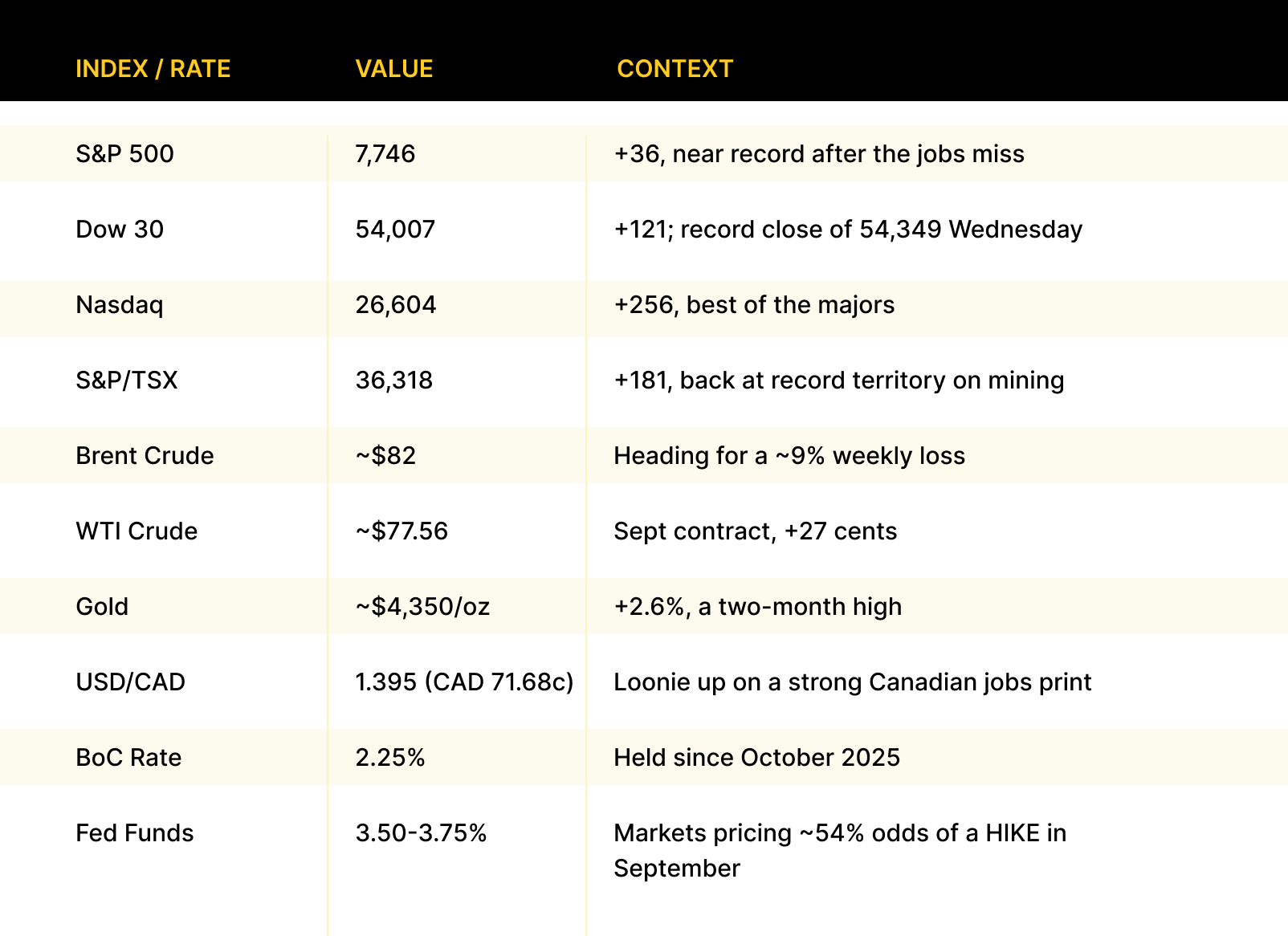
Note: the striking thing about this market is that the debate is no longer about when the Federal Reserve cuts but whether it hikes. Energy-driven inflation had pushed markets to roughly even odds on a September increase, with some strategists talking about three hikes across the rest of the year, an extraordinary reversal. Then Friday’s payrolls landed and the US economy unexpectedly shed jobs in July, with wages and participation both falling, which rather undercut the argument that the labour market was the inflationary problem. Treasury yields eased, gold jumped 2.6% to a two-month high, and equities rallied. Canada went the other way with a strong July employment report, lifting the loonie to 71.68 US cents and helping push the TSX back toward records on materials strength. Oil is the wildcard: Brent sits near $82 and is heading for a 9% weekly loss on hopes of a Hormuz deal, having traded above $140 in April and below $73 in June. The Bank of Canada remains at 2.25%.
1 USD = 1.395 CAD = 0.88 EUR = 0.75 GBP at Friday late-morning.
Sources
People, Club Shay Shay, Variety, HarbourView (opener); FT, Bloomberg, CNBC, CBS Sports, Golf Digest, Sky Sports (LIV Golf); Semafor, Reuters, Light Reading, Investing.com, Macrotrends, FCC, TD Cowen (SpaceX); NBER, Economic History Review, EU/UN sources, Michael Pettis, Angus Maddison, KPMG (China); FT, EIA, Reuters, Bloomberg, Kpler, ING, Trading Economics, Al Jazeera (Hormuz); FT, Irish Times, Al Jazeera, Al-Monitor, SIPRI, Arab Gulf States Institute, Defence Turkey (defence pact); Reuters, NBC, Guardian, Mappr, Emily Bass (closer); Canadian Press, CNBC, Trading Economics, Motley Fool, TheStreet, Zacks (market data).
Market data pulled Friday August 7, 2026 at late-morning levels rather than prior close, given how much moved on the payrolls report. Live items this edition: the Iran-Oman channel talks are moving hourly and the fee dispute remains unresolved, with the Iranian parliament reviewing a draft and the Supreme Leader’s approval still outstanding; LIV Golf has signed a term sheet but no definitive agreement, and the Rahm contract figures are trade-press estimates rather than filings; SpaceX’s valuation moves daily following its lockup expiry; the Saudi-Turkey-Pakistan pact was signed today and its terms are as described by the parties. Currency at Friday late-morning rates.